Written by Alex Ren
Updated on 9 min read
How much is my Pokémon card worth? The five things that decide it, and where to look them up
Quick summaryA Pokémon card is worth what the last people to buy that exact printing, in that condition, actually paid for it. Not what a seller is asking, not what a video said about "a card like this", and not the number a shop gave your cousin. Five things decide the figure: which printing it is, its condition, whether it is graded, its language, and what the market wants this month. Here is how to read each one, and where the honest numbers are.
In this article
- Step one: identify the exact printing, not the character
- Step two: judge the condition honestly
- Step three: raw or graded, two different markets
- Step four: the language and the market it sells in
- Step five: where to look up the number, and what each source hides
- The four traps that produce a wrong number
- If you plan to sell: the number you will actually receive
- Frequently asked questions
Most "what is my card worth" searches end on a page that shows one big number and a buy button. That number is a listing price: what someone hopes to get, which is not what anyone paid. The method below takes ten minutes for a card you care about, and it gets you a figure you could defend to a buyer.
Step one: identify the exact printing, not the character#
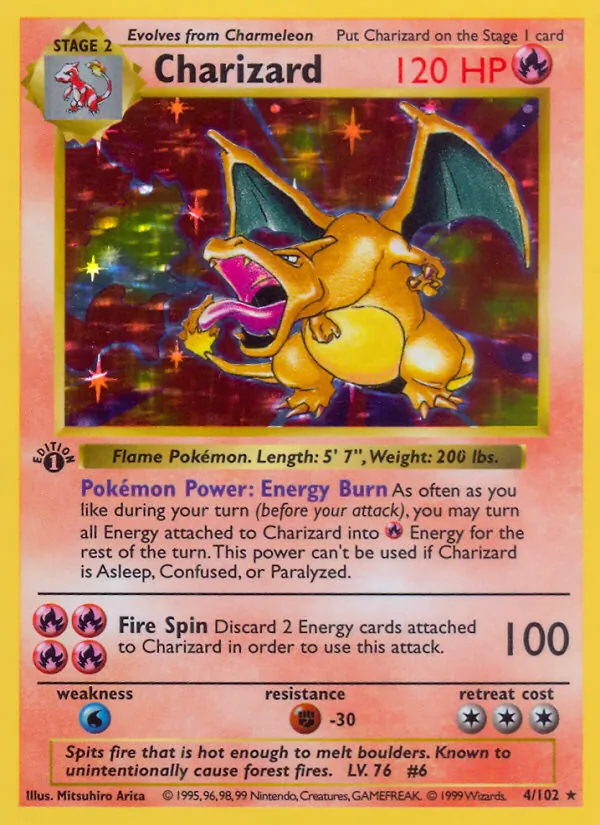
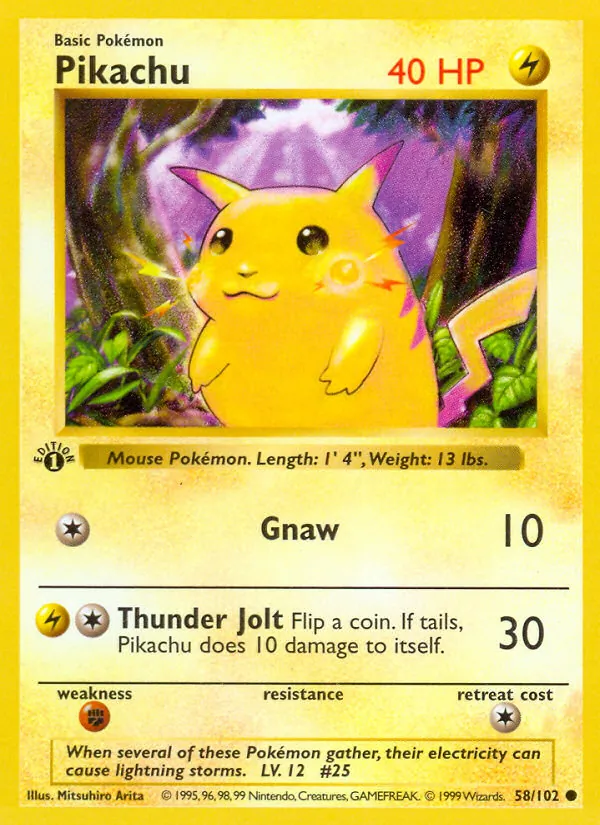
The single most common mistake is looking up the character. "Charizard" is not a card; it is a name printed on hundreds of different cards across thirty years, from a few cents to six figures. A price only means something for one printing: one set, one collector number, one finish. Three marks on the card tell you which one you have.
- The collector number, bottom corner, written like 4/102 or 199/165. The number after the slash is the size of the main set, and a first number above it means a secret rare.
- The set symbol, next to the number, a small icon unique to each expansion. Vintage Base Set cards have no symbol at all, which is itself the identification.
- The finish: a holographic picture, a holographic border with a flat picture (reverse holo), or nothing shiny at all. Each finish is a separate card with a separate price, and it is the difference that catalogues and beginners most often miss.
Two more marks change the figure enough to deserve their own guides: the 1st Edition stamp and the "shadowless" layout on early Wizards of the Coast prints, and the rarity symbol next to the number. If you are not sure what those mean on your card, read them before pricing anything.
Step two: judge the condition honestly#
Condition is where most private valuations go wrong, and always in the same direction. A card that has been in a binder since 1999 is almost never Near Mint. Look at it under a lamp, tilted: whitening on the back edges, a soft corner, a scratch across the holo, a faint bend from a rubber band. Each of those moves the card down a grade, and each grade down can halve the price of a valuable card.
The two big marketplaces use different scales, which is a trap in itself: a card sold as "Excellent" on one is not the same thing as "Excellent" on the other. The table maps them roughly; when in doubt, grade one step lower than you would like to.
| TCGplayer | Cardmarket | What it looks like |
|---|---|---|
| Near Mint | Mint / Near Mint | No visible wear at arm's length; at most a speck under a lamp |
| Lightly Played | Excellent / Good | Light edge whitening, a minor scratch, corners still sharp |
| Moderately Played | Light Played | Visible whitening, a soft corner, a scuffed holo |
| Heavily Played | Played | Creases, heavy whitening, scratches you notice at once |
| Damaged | Poor | Tears, water damage, writing, a bend across the card |
Step three: raw or graded, two different markets#
A card in a PSA, Beckett or CGC holder with a grade on the label trades in a market of its own, at prices that have nothing to do with the raw card. A PSA 10 of a sought-after card can be worth ten or twenty times the raw Near Mint price; a PSA 7 of the same card can be worth less than a clean raw copy, because the holder has fixed its flaws in writing. Do not price a raw card against graded sales, and do not price a graded card against raw ones. Whether sending a card to a grader is worth the fee is a calculation, and we ran it.
Step four: the language and the market it sells in#
The same printing in English, French, German or Japanese is four different cards with four different prices, and the ranking is not what you would guess. Japanese cards are often cheaper than English for modern sets, because Japan prints more of them, and sometimes far more expensive for vintage. French, German, Italian and Spanish cards usually sell for less than English on the same marketplace, because fewer buyers want them, but a French collector on Cardmarket may pay more for a French card than an American would. Where the buyer is matters as much as what the card is.
This is also why a European and an American figure for the same card rarely agree. Cardmarket lists in euros and sells mostly in Europe; TCGplayer lists in dollars and ships mostly inside the United States. A price is a price on one market; convert it and you have an estimate, not a fact.
Step five: where to look up the number, and what each source hides#
Once you know the printing, the condition and whether it is graded, four sources give you a figure, and each hides something.
- Marketplace listings (Cardmarket in Europe, TCGplayer in the US). The lowest listing is what you could buy the card for today, which is roughly what you could sell it for after fees. The "trend" or "market" figures they publish are better than the lowest listing, because they lean on completed sales, but they are still one marketplace's view.
- Sold listings on eBay. Filter a search to sold and completed items and you see what people actually paid, with the date. It is the closest thing to truth, and the one most valuation sites skip because it is slow. Watch for lots, damaged copies and the wrong printing in the results.
- PriceCharting, which aggregates sold prices per printing and per grade, in dollars. Excellent for graded cards; thinner for European languages.
- A scanner app that names the printing and shows you a range with its source and date. It saves the identification step, which is the one people get wrong. It should also tell you when it has no recent sale rather than inventing one; ours does, and the section below says how.
Join 5,000+ collectors




collection is worth.
Point the camera at the card and read the range, the venues behind it and the date it was read.
- Zukan reads the collector number and the set mark printed on the card, on your phone, so it names the printing rather than guessing from the artwork.
- The price is a range from the market data available for that exact printing, with every venue and its date listed. Where no recent sale exists, it says "No recent sales" instead of inventing one.
- Twenty-five free scans, and every card in your collection priced the same way, with its source and date.
Free to download · iPhone · Android
The four traps that produce a wrong number#
- Listing price instead of sold price. Anyone can ask any amount. A card "listed at €400" that has sat there for a year is not worth €400.
- The wrong printing. A search for the name returns the most expensive version first. Check the number, the set symbol and the finish against your card before believing anything.
- Near Mint assumed. Every guide quotes the top raw condition. Grade your card down first, then look.
- Old data. A price from three months ago is a memory. Markets in this hobby move by tens of percent in a season; see the article on why prices change for the mechanisms. Any figure worth using carries its date.
If you plan to sell: the number you will actually receive#
The market price is not what lands in your account. A marketplace takes a commission, payment processing takes a slice, shipping and a sleeve and a toploader cost something, and a private buyer expects a discount for taking the card off your hands in one go. As a rule of thumb, expect to receive somewhere between two thirds and four fifths of the market figure for a single card sold to a stranger, and less for a bulk lot sold to a shop, which needs its own margin. Pricing a card at what it is worth and pricing it at what it will fetch are two different questions, and being clear about which one you are asking saves a lot of disappointment.
Frequently asked questions
How do I know which Pokémon card I have?
Read the collector number in the bottom corner (for example 4/102), find the set symbol next to it, and note the finish: holographic picture, holographic border, or plain. Those three together name one printing. Vintage Base Set cards have no set symbol, and a black 1st Edition stamp under the picture marks the first print run.
Are my old Pokémon cards from the 1990s worth anything?
Some are, most are not. Commons and uncommons from the first sets sell for cents; the holographic rares, 1st Edition and shadowless cards from Base Set, Jungle and Fossil can be worth from a few euros to several thousand depending on the card and its condition. Charizard, Blastoise and Venusaur from Base Set are the famous ones, but only in good condition.
What is the most accurate way to price a Pokémon card?
Sold listings for the exact printing in the same condition, as recent as possible, on the marketplace where you would sell. eBay sold and completed items, Cardmarket sales history and TCGplayer market price are the three references; a figure without a date and a condition is not a price.
Does a card need to be graded to be valuable?
No. Raw cards sell every day at real prices. Grading adds value mostly for cards that are already sought after and in excellent condition, where a high grade multiplies the price. For an ordinary card, the grading fee costs more than the value it adds.