Cet article n'est pas encore traduit : il est affiché en anglais.

Écrit par Alex Ren
Mis à jour le 7 min de lecture
Why card prices go up and down: reprints, rotation, hype, and the eight other forces behind the nightly number
En brefCard prices move because supply and demand for one specific printing move, and in this hobby both can change overnight: a reprint announcement doubles supply, a rotation removes half the demand, a tournament win or a video adds it back. Most moves have one of about ten causes, and once you can name the cause you can guess how long the move lasts. This is the list.

Dans cet article
A collection tracker that shows a total is really showing the sum of hundreds of small markets, each with its own weather. When the total jumps or slides, the useful question is not "is the hobby up" but "which cards moved, and why". Here are the forces, roughly from slowest to fastest.
The supply side: how many copies exist and how many are for sale#
Reprints
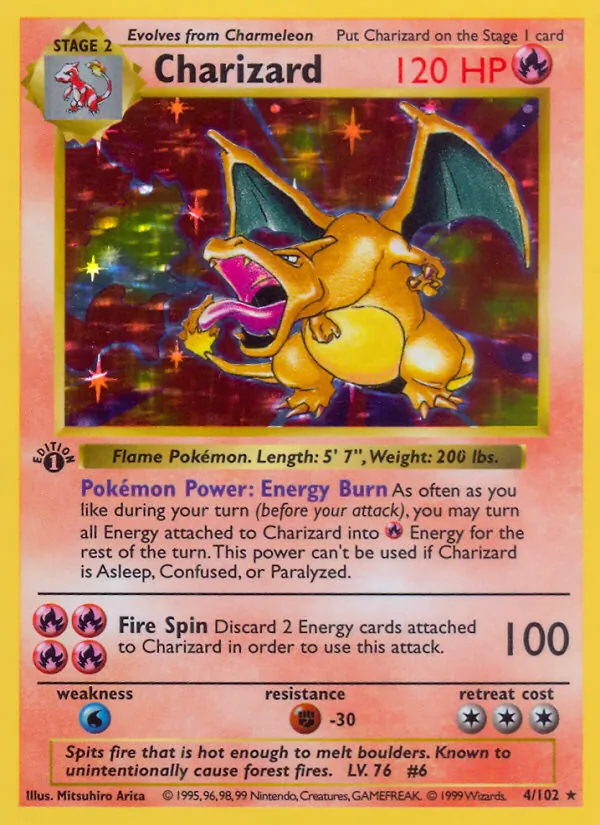
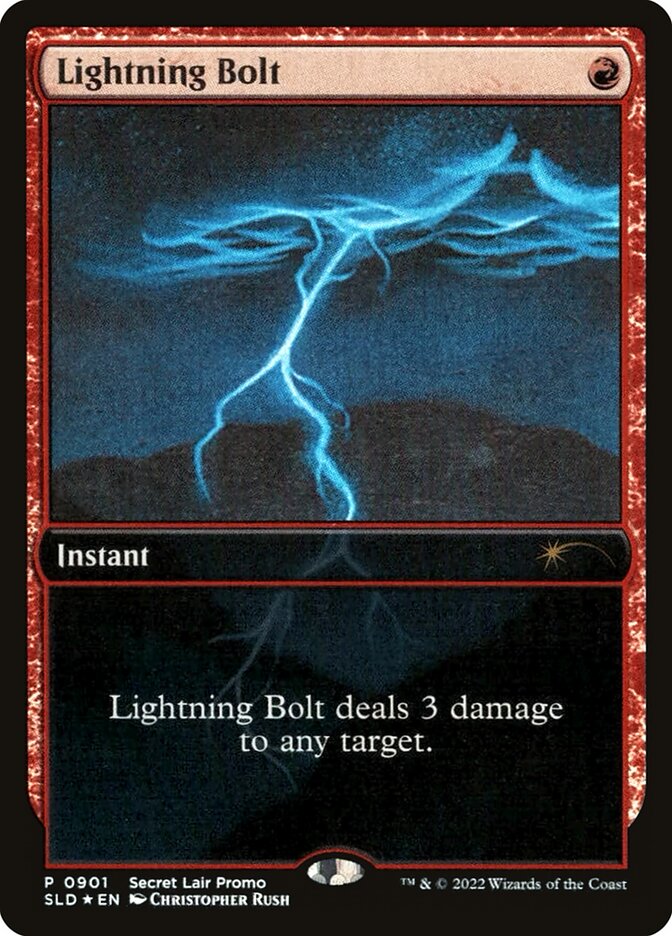
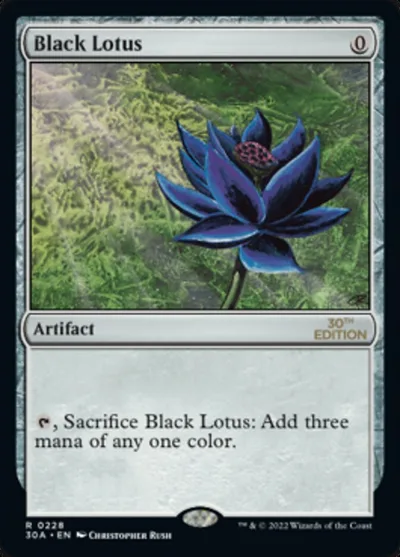
The single largest force on modern card prices. When a publisher announces that a card will be printed again, whether in a new set, a special collection or a promo, the price of the existing printing falls, often before a single new copy is opened, because sellers rush to get out ahead of the supply. Magic: The Gathering has decades of examples through its reprint sets; Pokémon does it through special sets and promos. The old printing usually keeps a premium if it is visually distinct (a different frame, a first-print stamp, an older set symbol), and loses most of its value if the reprint is identical to the eye.
Print runs and print waves
A set stays in print for months or years, in waves. While it is being printed, singles drift down as more boxes are opened; once the last wave ships, supply becomes fixed and prices start to reflect scarcity. This is the slow tide under every other move: a modern chase card is usually cheapest six to twelve months after release and starts recovering when the set leaves shelves.
Grading populations
For graded cards, supply is the population report: the count of copies the grader has returned at each grade. A card with twelve PSA 10s in existence is a different asset from the same card once four hundred more have been graded. Populations only grow, so a high-grade premium tends to erode as submissions pile up, unless demand grows faster.
The demand side: who wants the card this month#
Rotation and playability
Cards that are played, not only collected, carry a second demand that can vanish on a date. Magic rotates its Standard format every year; Pokémon retires cards from its Standard format by regulation mark. A staple that leaves the format loses its players the same week, and its price follows unless collectors were the ones holding it up. The reverse also happens: a new set can make an old card playable again, and its price climbs before most people notice the combination.
Tournament results
A deck that wins a large event gets copied by thousands of players the following week, and every card it needs four of gets bought four at a time. These spikes are sharp and often short: once the format adapts, the card settles back, though rarely all the way.
Social hype and nostalgia waves
A video, a celebrity purchase, an anniversary, a new game or film in the franchise: each sends a wave of new buyers towards a small number of famous cards, and those cards rise far faster than the rest of the market. These are the moves that make headlines, and the ones most likely to reverse. The famous 2020 to 2021 surge in vintage Pokémon prices, followed by a long correction, is the reference case.
Seasons
Demand for sealed product peaks before the holidays, and singles often firm up in the weeks around them while more people are opening packs and completing sets. Late winter and summer tend to be quieter. It is a small effect on any one card and a visible one on a whole collection.
Moves that are not moves: currency, thin markets and the source itself#
Some of the changes you see in a tracker are not the card moving at all. A collection valued in a currency other than the marketplace's changes value every time the exchange rate does. A card that sells twice a month has a "price" that is really the last two buyers' moods; one unusual sale swings it, and the next one swings it back. And two sources can disagree about the same card by a wide margin because they measure different things, so switching source looks like a move that never happened.
| Force | Direction | Speed | How long it lasts |
|---|---|---|---|
| Reprint announcement | Down | Days, often before release | Permanent for identical reprints; partial for distinct ones |
| Set leaves print | Up, slowly | Months | Years; the slow tide |
| Rotation | Down for staples | Weeks around the date | Permanent unless the card is a collector piece |
| Tournament result | Up for the deck's cards | A week | Weeks to months, rarely all the way back |
| Hype wave | Up for famous cards | Days | Months, then a correction |
| Grading population growth | Down for high grades | Months | Permanent |
| Holiday season | Up, mildly | Weeks | Until January |
| Currency | Either, in your currency only | Daily | As long as the rate holds |
Reading a move in your own collection#
When the total moves, find the cards responsible before drawing any conclusion. A tracker that only shows the sum makes you feel richer or poorer without telling you why; one that shows the risers and fallers for the day, the week and the month lets you match the move to a cause on this list. If the cause is a reprint, the move is likely permanent and selling early beats selling late. If it is a tournament spike, waiting is usually rewarded. If it is a thin market wobble, doing nothing is the correct trade.
Rejoins plus de 5 000 collectionneurs




ta collection.
See which cards explain today's move, across twenty games, before you react to it.
- The Market tab, in Zukan Pro, lists the biggest risers and fallers over a day, a week, a month or three, by card, by set or by game.
- Flip the collection total to see which of your own cards explain the day's change.
- Watch a card you do not own yet, free forever, and with Pro get a notification the day it crosses your line.
Téléchargement gratuit · iPhone · Android
- 197,39 €+296,4 %
- 429,11 €+270,3 %
- 62,66 €+74,4 %
- 6,01 €−91,7 %
- 14,73 €−42,7 %
Questions fréquentes
Why did my card drop in value overnight?
The most common causes are a reprint announcement, a rotation date, or a single unusual sale in a card that trades rarely. Check the news for the card's set first, then whether the figure you are looking at comes from a venue with regular sales. A one-day drop from one source is often a measurement, not a market.
Do Pokémon cards always go up in value?
No. Modern cards usually fall for months after release while the set is in print, and only some recover. Vintage cards rose sharply in 2020 and 2021 and corrected afterwards. Over long periods scarce cards in high grades have done well; the average card has not.
How often do card prices update?
Marketplace figures change whenever a sale or a listing happens; price guides and apps usually read them once a day. Any figure you use should carry the date it was read, and a price without a date should be treated as old.
Does a reprint always lower the price of the original?
It lowers it in almost every case, but by how much depends on whether the reprint looks the same. An identical reprint absorbs most of the demand; a reprint with a different frame, set symbol or artwork leaves the original with a collector premium, sometimes a large one.